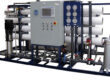

What are water treatment systems? This fundamental question represents the cornerstone of modern industrial efficiency and environmental sustainability. For any industrial enterprise, the management of water resources and the storage of critical gases are not merely logistical concerns but the very lifelines of production. AAT stands at the forefront of this sector, providing comprehensive solutions ranging from Pressure Tank Production and Industrial Treatment Plant Installation to high-tech filtration and gas storage units. In an era where resource scarcity and strict environmental regulations dictate market success, understanding the intricacies of these systems is essential for global industrial players.
What are water treatment systems?
What are water treatment systems? In the simplest terms, these are integrated technological frameworks designed to remove contaminants from water, making it suitable for specific end-uses such as industrial processes, cooling, or boiler feed. In the industrial landscape, “raw water” is rarely pure enough for direct use. It contains dissolved minerals, organic matter, and suspended solids that can cause catastrophic failure in machinery. AAT specializes in transforming this raw resource through advanced Water Treatment methodologies, ensuring that every drop meets the precise chemical and physical parameters required by the client’s facility.
The architecture of these systems varies depending on the source. For instance, River Water Treatment Systems must be robust enough to handle high turbidity and seasonal fluctuations in organic load. By utilizing a combination of sedimentation, filtration, and chemical dosing, these systems provide a consistent supply of processed water. The journey of water through these systems is a meticulous process of refinement, where each stage serves a specific purpose in protecting the integrity of the downstream equipment manufacturing and production lines.
The Role of Pressure Vessels and Gas Storage in Industry
Beyond the liquid phase, the storage and handling of gases and pressurized fluids are critical. AAT is a pioneer in the design and fabrication of pressure tanks and specialized pressure vessels. These units are engineered to withstand extreme conditions, ensuring the safety of the facility and the purity of the stored medium. Whether it is for gas storage in a chemical plant or the containment of high-pressure steam, the engineering precision required for these tanks is unparalleled.
For industries dealing with liquefied gases at extremely low temperatures, cryogenic storage tanks are indispensable. These tanks utilize advanced vacuum-insulation technology to maintain the liquid state of gases like nitrogen, oxygen, or argon. To integrate these gases into the production line, vaporizers and heat exchangers are utilized to transition the liquid back into a gaseous state or to manage thermal energy within the system. Additionally, for less volatile liquids, atmospheric storage tanks provide a reliable and cost-effective storage solution. Each piece of equipment is a testament to the high standards of pressure tank production and industrial treatment plant installation that AAT upholds.
Core Filtration: Sand, Carbon, and Softening
The first line of defense in any treatment plant consists of mechanical and chemical filtration. Sand filter units are utilized to remove suspended solids and turbidity, preventing the clogging of more sensitive downstream components. Following this, a carbon filter is employed to adsorb organic compounds, chlorine, and odors, which is vital for both process water and the protection of membranes in advanced systems.
One of the most common challenges in industrial water use is “hardness,” caused by calcium and magnesium ions. Water softening systems address this by using ion-exchange resins to replace these ions with sodium, thereby preventing scale buildup in boilers and cooling towers. AAT designs these systems to be fully automated, ensuring continuous operation with minimal human intervention. These foundational steps are critical components of any professional approach to the question: What are water treatment systems?
Advanced Purification: Reverse Osmosis and EDI
When ultra-pure water is required, standard filtration is not enough. Reverse Osmosis (RO) Systems utilize semi-permeable membranes and high-pressure pumps to remove up to 99% of dissolved salts and impurities. These Reverse Osmosis (RO) Systems are the workhorses of the pharmaceutical, electronics, and power generation industries.
For even higher levels of purity, demineralization systems and electrodeionization systems are utilized. Unlike traditional ion exchange that requires chemical regeneration, electrodeionization systems use electricity to continuously regenerate the resin, making it an eco-friendly and highly efficient choice for “polishing” water to mega-ohm levels of resistivity. To ensure the water is free from microbial life, ultraviolet disinfection systems are integrated as a final safety barrier, neutralizing bacteria and viruses without the use of chemicals. Additionally, degasifier systems are used to remove dissolved oxygen and carbon dioxide, which are primary drivers of corrosion in high-pressure steam systems.
Environmental Protection: Wastewater and Flue Gas Treatment
Sustainability is no longer optional. Wastewater treatment systems are essential for cleaning industrial discharge to meet legal standards before it is released back into the environment. However, AAT goes a step further by implementing recovery systems. These systems treat wastewater to a level where it can be recycled back into the production process, significantly reducing the “water footprint” of the facility.
Air quality is equally important. Flue gas treatment units are installed to remove harmful pollutants and particulates from industrial chimneys, while odor removal systems ensure that the facility does not negatively impact the surrounding community. These environmental solutions are integrated into the overall consulting & project engineering phase, where AAT experts design a holistic map for the facility’s resource management.
Operational Excellence: Rental and Service Maintenance
The lifecycle of an industrial plant involves fluctuating needs. Rental treatment services provide a flexible solution for temporary capacity increases or emergency needs without the long-term capital expenditure. This allows businesses to maintain production during upgrades or peak seasons.
Furthermore, the longevity of these complex systems depends on a rigorous service maintenance operation. Regular calibration of sensors, replacement of filter media, and inspection of pressure vessels are necessary to prevent downtime. AAT provides dedicated support teams to ensure that every water treatment plant operates at peak efficiency year-round. Understanding what are water treatment systems? also means understanding that these systems require professional care and expert consulting & project engineering to remain functional over decades.
Conclusion: Engineering the Future of Water
In conclusion, when we ask what are water treatment systems?, we are looking at a multi-disciplinary field that combines chemistry, physics, and high-level mechanical engineering. From the manufacturing of pressure tanks and cryogenic storage tanks to the implementation of electrodeionization systems and reverse osmosis (RO) systems, the goal is always the same: reliability and purity.
AAT continues to lead the industry by providing tailored solutions that address the specific challenges of each client. Whether it is river water treatment systems, wastewater treatment systems, or the fabrication of specialized pressure vessels, our commitment to quality remains unshakable. By integrating recovery systems and advanced flue gas treatment, we help industries grow while protecting our planet’s most precious resources.