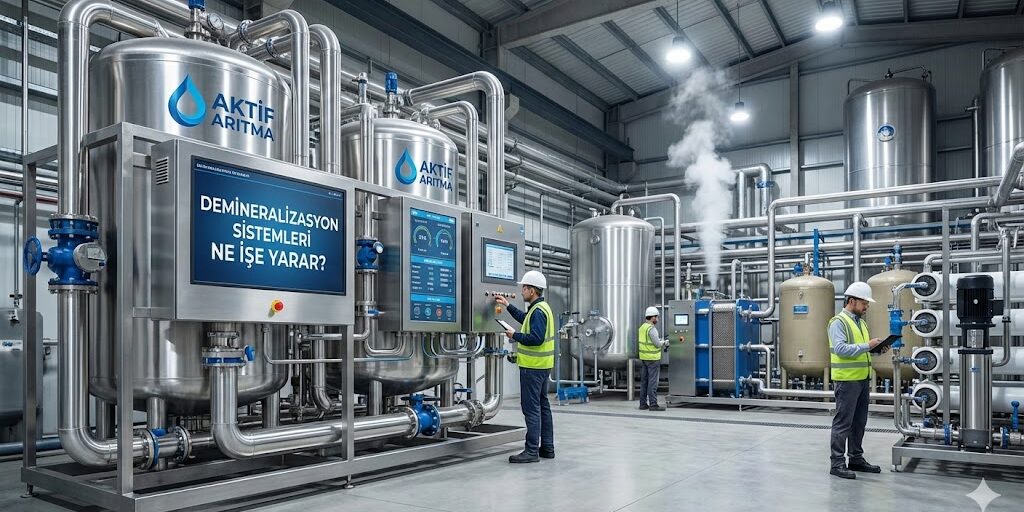
What do demineralization systems do? This question is at the heart of modern industrial efficiency, particularly for facilities that require water with nearly zero conductivity. In the complex world of industrial manufacturing, water is often the primary cooling agent, the main solvent, or the critical steam generator. However, raw water contains various minerals that can wreak havoc on expensive machinery. AAT specializes in removing these dissolved ions to provide high-purity water, ensuring that your operations run smoothly and without interruption.
The Critical Role of High-Purity Water in Industry
When we look at the broader scope of Industrial Treatment Plant Installation, the purity of water is not just a preference; it is a necessity. Minerals like calcium, magnesium, silica, and sodium, which are naturally found in water sources, can lead to scaling and corrosion. So, what do demineralization systems do to prevent this? They utilize a sophisticated ion-exchange process to strip water of its mineral content, producing what is commonly known as “deionized water.”
At AAT, we integrate these systems into comprehensive Water Treatment strategies. Whether you are operating high-pressure boilers or sensitive laboratory equipment, understanding what do demineralization systems do is the first step toward protecting your investment. Without these systems, heat exchangers and pressure vessels would quickly fail due to mineral buildup, leading to costly downtime and repairs.
Technical Mechanism: How Ion Exchange Works
To truly answer what do demineralization systems do, one must understand the chemistry of ion exchange. The process typically involves passing water through specialized resin beds.
Cationic and Anionic Exchange
Cation Exchange: In the first stage, water passes through a bed of cationic resin. Here, positively charged ions like Calcium ($Ca^{2+}$) and Magnesium ($Mg^{2+}$) are exchanged for Hydrogen ($H^+$) ions.
Anion Exchange: The water then enters the anionic resin bed, where negatively charged ions like Chloride ($Cl^-$) and Sulfate ($SO_4^{2-}$) are exchanged for Hydroxyl ($OH^-$) ions.
The combination of $H^+$ and $OH^-$ ions results in pure $H_2O$. This is the technical essence of what do demineralization systems do. By utilizing high-quality Equipment Manufacturing standards, AAT ensures that these resin tanks are built to withstand the chemical stresses of regeneration and high-pressure flow.
What Do Demineralization Systems Do?
In this section, we explore the specific functions and benefits of these systems across various industrial sectors. What do demineralization systems do for a business owner or a plant engineer?
1. Prevention of Scaling in Boilers and Heat Exchangers
In steam production, even a tiny amount of mineral content can lead to “scaling.” This layer of stone-like material acts as an insulator, forcing the system to use more energy to heat the water. What do demineralization systems do here? They eliminate the scale-forming minerals, ensuring that heat exchangers operate at peak thermal efficiency.
2. Safeguarding Pressure Vessels
Pressure Tank Production requires materials that can handle extreme conditions. However, if the water inside these tanks is corrosive or mineral-heavy, the integrity of the metal can be compromised over time. AAT designs systems that provide non-corrosive water, thereby extending the lifespan of your pressure vessels and atmospheric storage tanks.
3. Precision in the Pharmaceutical and Chemical Industries
In these sectors, water is an ingredient. Any mineral variation can ruin a chemical formula or a batch of medicine. What do demineralization systems do to solve this? They provide a consistent, ultra-pure water standard that meets international pharmacopeia requirements.
Integration with Other Arıtma Technologies
A demineralization unit rarely works alone. It is part of a larger ecosystem of Water Treatment technologies.
Sand Filter and Carbon Filter: Before water reaches the demineralization resins, it must be cleared of suspended solids and chlorine. A sand filter removes turbidity, while a carbon filter eliminates organic compounds and chlorine that could damage the resins.
Reverse Osmosis (RO) Systems: Often, Reverse Osmosis (RO) Systems are used as a pre-treatment for demineralization. This “dual-stage” approach reduces the load on the resins, making the overall process more cost-effective.
Degasifier Systems: These are used to remove dissolved carbon dioxide ($CO_2$), which reduces the load on the anionic resin and improves the efficiency of the demineralization process.
Electro Deionization Systems (EDI): For those seeking even higher purity without the use of regeneration chemicals, Electro Deionization Systems offer a continuous, chemical-free alternative.
Engineering and Manufacturing Excellence by AAT
The effectiveness of an arıtma system depends heavily on the quality of its components. AAT excels in Equipment Manufacturing, producing high-grade pressure vessels, gas storage units, and cryogenic storage tanks. Our expertise in Pressure Tank Production ensures that every demineralization unit is built to last.
Beyond manufacturing, we offer comprehensive Consultancy & Project Engineering. We don’t just sell equipment; we design solutions. From River Water Treatment Systems to complex Wastewater Treatment Systems, our engineers evaluate your raw water quality to answer exactly what do demineralization systems do for your specific needs.
Sustainable Water Management and Recovery
In today’s environmentally conscious market, Recovery Systems are becoming vital. What do demineralization systems do in the context of sustainability? By providing high-purity water, they allow for more efficient recycling of process water.
Furthermore, our expertise in Flue Gas Treatment and Odor Removal allows us to provide a holistic environmental service. When combined with Wastewater Treatment Systems, a facility can significantly reduce its environmental footprint while lowering its water procurement costs.
Maintenance and Operational Support
Owning a system is only half the battle; maintaining it is where the long-term value lies. AAT provides dedicated Service Maintenance Operation teams to ensure your resins are regenerated correctly and your valves are functioning perfectly.
For companies that need immediate solutions without capital expenditure, we also offer Rental Treatment services. This allows you to experience exactly what do demineralization systems do for your production quality without a heavy upfront investment.
The Difference Between Softening and Demineralization
It is common to confuse Water Softening Systems with demineralization. What do demineralization systems do that softeners don’t?
Water Softening Systems only replace calcium and magnesium with sodium. The total dissolved solids (TDS) remain high.
Demineralization Systems remove almost all ions, leading to a significant drop in TDS and conductivity.
For high-pressure applications and precision manufacturing, softening is rarely enough. You need the comprehensive ion removal that only Demineralization Systems can provide.
Why Choose AAT for Your Treatment Needs?
With decades of experience in Industrial Treatment Plant Installation, AAT is more than a supplier; we are a partner. We understand the physics behind cryogenic storage tanks and the chemistry behind ultraviolet disinfection systems.
Our approach to what do demineralization systems do is rooted in data and engineering. We provide:
Custom-designed demineralization systems tailored to your flow rate.
High-quality equipment manufacturing for all tank and vessel needs.
Integration with ultraviolet disinfection systems to ensure biological purity.
Expert service maintenance operation to keep your system at 100% efficiency.
Future Trends in Deionization
As technology advances, what do demineralization systems do to adapt? The move toward Electro Deionization Systems (EDI) is a prime example. These systems use electricity to regenerate resins, eliminating the need for bulk acid and caustic storage. This not only improves safety but also aligns with modern Recovery Systems and sustainability goals.
Whether you are treating water from a local municipality or installing River Water Treatment Systems, the goal remains the same: pure, reliable, and affordable water. AAT continues to lead the way in Consultancy & Project Engineering, helping industries navigate these technological shifts.
Conclusion: Empowering Industry Through Purity
Understanding what do demineralization systems do is essential for any modern industrial operation. These systems are the silent guardians of efficiency, protecting your heat exchangers, pressure vessels, and final products from the damaging effects of mineral contamination.
From the initial Sand Filter to the final Ultraviolet Disinfection Systems, AAT provides a seamless, end-to-end water treatment journey. By investing in professional Industrial Treatment Plant Installation and reliable Equipment Manufacturing, you ensure the longevity and success of your business.