Maintenance of water treatment systems is a critical requirement for ensuring the operational efficiency, safety, and longevity of industrial facilities. In the modern industrial landscape, water is more than just a resource; it is a vital component of production cycles, cooling processes, and energy generation. AAT, with its extensive expertise in pressure tanks, cryogenic storage tanks, and pressure vessels, understands that the integrity of these systems depends heavily on the quality of the water circulating through them. Therefore, maintenance of water treatment systems is not merely a routine check but a comprehensive engineering necessity that prevents costly downtime and equipment failure.
The Vital Importance of Industrial Maintenance of Water Treatment Systems
The core objective of maintenance of water treatment systems is to stabilize water chemistry and ensure that all mechanical components are functioning at their design parameters. Whether a facility utilizes river water treatment systems or complex wastewater treatment systems, the accumulation of minerals, biological growth, and physical debris can quickly degrade performance. AAT provides specialized service maintenance operation protocols that address these challenges head-on.
Without regular maintenance of water treatment systems, industrial components such as evaporators and heat exchangers become susceptible to scaling and corrosion. This leads to a significant drop in heat transfer efficiency, forcing the system to consume more energy to achieve the same results. By prioritizing the maintenance of water treatment systems, businesses can achieve up to a 30% reduction in energy costs and significantly extend the life of their atmospheric storage tanks and other critical infrastructure.
Comprehensive Care for Pre-filtration: Sand and Carbon Filters
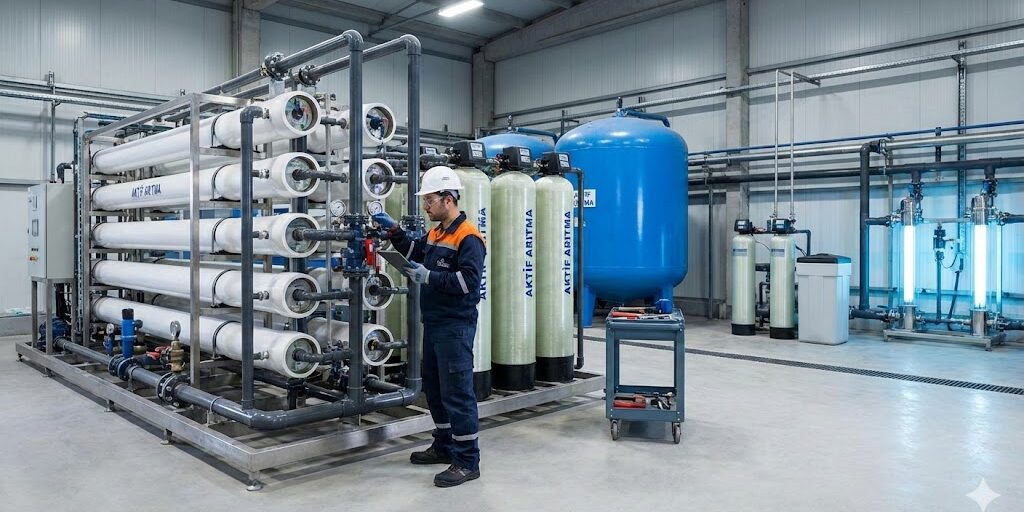
The first line of defense in any facility is the pre-filtration stage, which typically includes sand filter and carbon filter units. Maintenance of water treatment systems at this stage focuses primarily on the backwashing process. Over time, suspended solids clog the media bed, increasing the pressure drop across the vessel. AAT engineers emphasize that failing to perform this part of the maintenance of water treatment systems can lead to “channeling,” where water bypasses the filtration media entirely, carrying contaminants downstream to sensitive equipment like reverse osmosis (RO) systems.
In carbon filter units, the maintenance of water treatment systems also involves monitoring the iodine value of the carbon. Once the adsorption sites are saturated, the carbon must be replaced to ensure the removal of chlorine and organic compounds. Our consulting & project engineering services help clients determine the exact frequency for these replacements, ensuring that the maintenance of water treatment systems remains proactive rather than reactive.
Water Softening and Demineralization: Protecting High-Value Assets
Hard water is the primary cause of scale buildup in pressure vessels and piping. Water softening systems use ion-exchange resins to replace calcium and magnesium with sodium ions. The maintenance of water treatment systems for softeners involves checking the brine tank, ensuring high-quality salt is used, and verifying the regeneration cycle timing. AAT ensures that during the maintenance of water treatment systems, the resin integrity is tested to prevent “resin leakage” into the process stream.
For industries requiring ultra-pure water, demineralization systems and electrodeionization (EDI) systems are employed. These systems are highly sophisticated and require precise maintenance of water treatment systems. Electrodeionization systems, in particular, rely on electrical current and specialized membranes. Regular maintenance of water treatment systems for EDI units includes monitoring voltage stability and ensuring that the feed water meets strict conductivity requirements to prevent module fouling.
Advanced Technologies: Maintenance of water treatment systems for RO and UV
Reverse osmosis (RO) systems represent the pinnacle of modern water purification. However, their membranes are extremely sensitive. A significant portion of the maintenance of water treatment systems involves the “Cleaning in Place” (CIP) process for RO membranes. By using specialized chemicals to remove biological films and mineral scales, AAT helps clients maintain high flux rates and salt rejection percentages. Regular maintenance of water treatment systems ensures that these expensive membranes do not need premature replacement.
Similarly, ultraviolet (UV) disinfection systems are essential for microbial control without the use of chemicals. The maintenance of water treatment systems for UV units includes the annual replacement of UV lamps and the cleaning of quartz sleeves. If the sleeves are coated with minerals, the UV light cannot penetrate the water, rendering the disinfection process useless. AAT includes these technical audits as a standard part of our service maintenance operation packages.
Specialized Systems: Degasifiers, Odor Removal, and Flue Gas Treatment
Industrial processes often produce complex byproducts that require specialized treatment. Degasifier systems are used to remove dissolved gases like oxygen and carbon dioxide, which are highly corrosive to gas storage units and pressure tanks. The maintenance of water treatment systems for degasifiers involves inspecting the internal packing material and ensuring the blower fans are operating correctly to facilitate gas stripping.
Furthermore, environmental compliance is a major concern for modern industry. AAT provides solutions for flue gas treatment, odor removal, and wastewater treatment systems. The maintenance of water treatment systems in these areas is vital for meeting legal discharge limits. Regular maintenance of water treatment systems for odor control units, for instance, ensures that chemical scrubbers or biofilters are effectively neutralizing volatile organic compounds (VOCs).
Integrating Equipment Manufacturing with Maintenance
One of the unique advantages of working with AAT is our background in equipment manufacturing. Because we design and build pressure vessels, kriyojenik depolama tankları (cryogenic storage tanks), and atmospheric storage tanks, we have an intimate understanding of their structural vulnerabilities. When we perform maintenance of water treatment systems, we look beyond the water chemistry; we inspect the physical integrity of the basınçlı tanklar (pressure tanks) to ensure they are safe for continued operation.
Our recovery systems are designed to recycle process water, reducing both environmental impact and operational costs. The maintenance of water treatment systems that incorporate recovery technology requires a holistic approach, as the recycled water characteristics can vary significantly. AAT provides the danışmanlık & proje mühendisliği (consulting & project engineering) needed to manage these complexities effectively.
Rental Treatment and Outsourced Maintenance Services
For facilities that need immediate solutions or wish to avoid capital expenditures, rental treatment options are an excellent choice. In these cases, the maintenance of water treatment systems is typically managed by the provider. AAT offers comprehensive service maintenance operation contracts where our technicians take full responsibility for the performance of the rental units. This ensures that the maintenance of water treatment systems is performed to the highest standards, allowing the client to focus on their core business.
Technical Checklist for Maintenance of water treatment systems
To ensure a thorough maintenance of water treatment systems, the following steps are essential:
System Audit: Reviewing logs and performance data to identify trends.
Mechanical Inspection: Checking pumps, valves, and pressure vessels for leaks or wear.
Sensor Calibration: Ensuring that conductivity, pH, and flow meters are accurate.
Chemical Analysis: Testing the treated water quality against the required specifications.
Media and Membrane Care: Performing backwashes, regenerations, or CIP as required by the maintenance of water treatment systems protocol.
Conclusion
The maintenance of water treatment systems is a fundamental investment in the health of your industrial facility. From the simplest sand filter to the most advanced electrodeionization systems, every component requires expert attention to function correctly. AAT stands ready to provide the specialized maintenance of water treatment systems your business deserves. By combining our manufacturing prowess with high-level engineering services, we ensure that your water treatment, gas storage, and recovery systems operate at peak efficiency year after year. Don’t wait for a system failure—make the maintenance of water treatment systems a priority today.