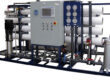

How Do Water Treatment Plants Work? This fundamental question serves as the cornerstone of modern industrial infrastructure and environmental preservation. In an era where water scarcity and industrial pollution are global concerns, understanding the mechanics behind water purification is essential for any business aiming for sustainability. Aktif Arıtma stands at the forefront of this sector, providing comprehensive solutions ranging from Equipment Manufacturing to Consultancy & Project Engineering. To grasp the complexity of these systems, we must look at how various technologies integrate to transform raw water into a high-quality resource. How Do Water Treatment Plants Work? The answer lies in a multi-stage process involving physical, chemical, and biological treatments designed to meet specific purity standards.
How Do Water Treatment Plants Work?
When we ask, How Do Water Treatment Plants Work?, we are essentially looking at a sophisticated assembly line for water molecules. The process typically begins with the intake of raw water from various sources. For many industrial facilities, River Water Treatment Systems are the primary choice for sourcing large volumes of water. However, surface water contains numerous impurities such as silt, organic matter, and microorganisms. The initial stage of How Do Water Treatment Plants Work? involves pre-filtration. Here, Sand Filter units play a vital role by trapping suspended solids and turbidity. Following this, a Carbon Filter is utilized to adsorb organic contaminants, chlorine, and unpleasant odors, ensuring the water is chemically prepared for more intensive purification stages.
The journey of water continues through more specialized systems. How Do Water Treatment Plants Work? when the water is “hard”? This is where Water Softening Systems come into play. By utilizing ion-exchange resins housed within robust Pressure vessels, these systems replace calcium and magnesium ions with sodium ions, preventing scale buildup in industrial machinery. For many clients, Aktif Arıtma designs these systems to ensure the longevity of downstream equipment. Understanding How Do Water Treatment Plants Work? also requires looking at gas removal. Degasser Systems are employed to eliminate dissolved gases like carbon dioxide and oxygen, which could otherwise cause severe korozyon in boilers and heat-sensitive components.
Advanced Membrane Technologies and Deionization
A major leap in the question of How Do Water Treatment Plants Work? occurred with the advent of membrane technology. Today, Reverse Osmosis (RO) Systems are the industry standard for removing dissolved salts and minerals. By applying high pressure to overcome osmotic pressure, water is forced through a semi-permeable membrane, leaving behind contaminants. This stage is crucial in high-precision industries such as pharmaceuticals and electronics. Furthermore, for applications requiring ultra-pure water, Demineralization Systems or the more advanced Electro Deionization Systems (EDI) are integrated into the flow. These processes ensure that the water reaches a level of purity where almost no ions remain. How Do Water Treatment Plants Work? in these contexts is a testament to the precision of modern chemical engineering.
At Aktif Arıtma, we recognize that not every facility requires a permanent installation immediately. Therefore, our Rental Treatment services provide a flexible answer to the question, How Do Water Treatment Plants Work? for short-term projects or emergency needs. Whether it is a temporary Reverse Osmosis (RO) Systems unit or a mobile filtration plant, the core principles of purification remain the same, providing high-quality water without the long-term capital expenditure.
The Role of Storage and Pressure Vessels
An often overlooked aspect of How Do Water Treatment Plants Work? is the storage and regulation of the treated water and the chemicals used in the process. Atmospheric Storage Tanks are used for storing large volumes of water at ambient pressure, while Pressure vessels are essential for housing the media for Sand Filter and Carbon Filter units. Furthermore, Aktif Arıtma specializes in the production of Basınçlı tanklar (Pressure tanks) that can withstand the rigorous demands of industrial cycles.
In broader industrial applications, the expertise in tank manufacturing extends beyond water. How Do Water Treatment Plants Work? in a facility that also handles gases? Such plants often require Gas Storage solutions and Cryojenik Depolama Tankları (Cryogenic Storage Tanks) for liquefied gases. The thermal management within these systems is handled by high-efficiency Evaporators and Heat Exchangers, which ensure that the fluids remain at the required temperatures for safe processing. By integrating these components, Aktif Arıtma provides a holistic engineering approach to both fluid and gas management.
Environmental Responsibility: Wastewater and Air Quality
The cycle of water does not end at the point of use. To truly answer How Do Water Treatment Plants Work?, we must look at what happens to the water after it has been used in a process. Wastewater Treatment Systems are designed to clean industrial discharge so it can be safely returned to the environment or reused. Recovery Systems are increasingly popular, as they allow factories to reclaim up to 90% of their water, significantly reducing costs and environmental footprint. How Do Water Treatment Plants Work? in a “Zero Liquid Discharge” (ZLD) facility is a complex but rewarding engineering challenge that Aktif Arıtma excels at solving.
Beyond water, industrial environmental control includes air quality. Flue Gas Treatment and Odor Removal systems are vital for keeping industrial zones habitable and compliant with strict environmental laws. While these are not “water” treatment in the traditional sense, they follow the same logic of removing harmful substances from a medium. How Do Water Treatment Plants Work? alongside these air scrubbers creates a comprehensive environmental protection shield for any modern factory.
Safety and Maintenance: The Human Element
No matter how advanced the technology, the question of How Do Water Treatment Plants Work? always involves human expertise. Ultraviolet Disinfection Systems are used to kill bacteria without chemicals, but these systems require precise calibration and monitoring. This is where Service Maintenance Operation becomes critical. Aktif Arıtma provides ongoing support to ensure that every Sand Filter, Degasser Systems, and Reverse Osmosis (RO) Systems unit operates at peak efficiency. Regular maintenance prevents membrane fouling and ensures that the Pressure vessels remain safe for operation under high stress.
How Do Water Treatment Plants Work? efficiently over decades? The secret is in the initial Consultancy & Project Engineering phase. By accurately analyzing the source water and the required output, engineers can select the right Equipment Manufacturing standards. For instance, choosing the right Evaporators and Heat Exchangers can save an industrial plant thousands of dollars in energy costs annually. At Aktif Arıtma, we don’t just sell equipment; we provide a roadmap for the entire lifecycle of the water.
Specialized Components and System Integration
To further explore How Do Water Treatment Plants Work?, we must examine the specific role of the components. Basınçlı Kaplar (Pressure vessels) are the “silent heroes” of the plant, holding the resins for Demineralization Systems and the membranes for RO. Without high-quality Equipment Manufacturing, these components would fail under the constant pressure cycles. Similarly, How Do Water Treatment Plants Work? when the input water has high mineral content? In such cases, the sequence of Water Softening Systems followed by Electro Deionization Systems ensures a consistent supply of high-purity water for critical processes.
For companies dealing with specialized gases, the inclusion of Cryojenik Depolama Tankları and advanced Gas Storage units shows the versatility of the engineering required. How Do Water Treatment Plants Work? in synergy with these systems often involves shared utilities and centralized control systems. Aktif Arıtma ensures that all these moving parts—from River Water Treatment Systems to Flue Gas Treatment—function as a single, cohesive unit.
Innovation and Future Trends
The future of How Do Water Treatment Plants Work? is increasingly digital. Smart sensors and AI are now being used to monitor the performance of Sand Filter and Carbon Filter units in real-time. This proactive approach, supported by Aktif Arıtma‘s Service Maintenance Operation, allows for predictive maintenance, reducing downtime. Furthermore, the development of more efficient Recovery Systems is making decentralized water treatment more viable for smaller businesses.
In conclusion, How Do Water Treatment Plants Work? is a question with a multi-layered answer. It involves the mechanical filtration of a Sand Filter, the chemical adsorption of a Carbon Filter, the molecular precision of Reverse Osmosis (RO) Systems, and the biological safety of Ultraviolet Disinfection Systems. It also encompasses the physical storage in Pressure vessels and Atmospheric Storage Tanks, and the thermal regulation provided by Evaporators and Heat Exchangers. Aktif Arıtma provides the expertise and the hardware to make this entire process seamless, efficient, and environmentally friendly.
Whether you are looking for Equipment Manufacturing, Rental Treatment, or full-scale Consultancy & Project Engineering, understanding How Do Water Treatment Plants Work? is the first step toward a successful partnership. By managing every drop of water and every cubic meter of gas with precision, we help industries grow while protecting our most precious natural resource. How Do Water Treatment Plants Work? They work through the harmony of science, engineering, and a commitment to a cleaner world, all of which are core values at Aktif Arıtma.