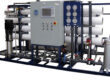

Capacities of river water treatment systems represent a vital parameter in meeting the water requirements of industrial facilities. Today, the efficient use of surface water has become mandatory for industrial plants, power stations, and municipalities. As AAT, with our wide range of services extending from pressurized tank production to the installation of complex treatment plants, we ensure that river water is brought to the standards of drinking, utility, and process water.
Capacities of River Water Treatment Systems and Design Criteria
When starting a water treatment project, the most critical factors to be determined are the capacities of river water treatment systems and the environmental variables affecting this capacity. River waters show great differences in terms of flow rate and pollution load (turbidity, suspended solids, organic load) seasonally. This situation makes it mandatory for systems to be designed in a flexible and durable structure.
The efficiency of the systems is directly related to the quality of the equipment manufacturing used. AAT offers modular and scalable solutions to meet high-tonnage water needs. The following basic elements are taken as a basis in capacity calculations:
Daily Average and Maximum Water Demand: Hourly peak consumption values of the facility.
Raw Water Analysis: Chemical and physical properties of the river water.
Output Water Quality Target: Whether process water, drinking water, or ultra-pure water will be produced.
Future Expansion Plans: The potential of the system’s physical area and components such as pressure vessels to support additional units.
Technological Components and Filtration Processes
A high-capacity river water treatment plant generally consists of a series of sequential processes. Although coarse screens and sedimentation tanks are used in the first stage, the sensitive filtration stage is the heart of the system.
Sand Filter Systems: This is the first barrier in retaining suspended solids (TSS). The high-pressure sand filters produced by AAT are designed to manage large capacities.
Carbon Filter Systems: It improves the taste, odor, and color of the water while absorbing organic pollutants.
Water Softening Systems: By removing hardness minerals (calcium and magnesium) from river water, it prevents lime formation in heat exchangers and boilers.
Advanced Treatment: Reverse Osmosis and Demineralization
In cases where standard filtration is not enough, especially for power plants or factories making sensitive production, Reverse Osmosis (RO) Systems come into play. Reverse Osmosis technology removes 99% of dissolved salts in water. At this point, the capacities of river water treatment systems can be increased in direct proportion to the number of membranes and the durability of the pressurized tanks.
For situations requiring more advanced levels of purity, Demineralization Systems and Electrodeionization Systems (EDI) are preferred. These systems ensure the safety of industrial processes by reducing the electrical conductivity of water to a minimum level. AAT offers full support from the project design of these facilities to service maintenance operation processes.
Capacities of River Water Treatment Systems: Solutions on an Industrial Scale
In large-scale projects, the capacities of river water treatment systems are the most important factor determining the operational cost (OPEX) of the facility. An increase in capacity may require larger volume atmospheric storage tanks and complex gas storage units.
AAT expert engineers analyze the future growth projections of your facility within the scope of consultancy & project engineering services. For example, if the water need of a textile factory, which is 100 $m^3$ per hour, will increase to 250 $m^3$ within a few years, the infrastructure of the system (piping, pressurized tanks, automation panels) is planned in accordance with this increase.
Importance of Pressure Vessels and Equipment Manufacturing
The quality of each component used in treatment processes determines the life of the system. Pressure vessels, evaporators, and heat exchangers are critical equipment operating under high pressure. AAT guarantees the compliance of these devices with international standards (ASME, CE, etc.) with the equipment manufacturing it carries out in its own facilities. Special vessels produced for cryogenic storage tanks and fluids in the gas phase represent the engineering power of the company.
Auxiliary Systems and Disinfection
To maintain the quality of treated water, it must be purified from microorganisms. Ultraviolet Disinfection Systems neutralize bacteria and viruses in water without using chemicals. In addition, degasser systems used for removing dissolved gases (oxygen, carbon dioxide) in water are a critical treatment step, especially for facilities that want to minimize the risk of corrosion.
Wastewater Treatment Systems: Making used water suitable for recovery or discharge standards.
Recovery Systems: Reclaiming water to the process to achieve “Zero Liquid Discharge” (ZLD) goals.
Flue Gas Treatment and Odor Removal: Controlling air emissions for environmental sustainability.
Rental Treatment and Flexible Capacity Solutions
Sometimes facilities may need additional capacity for a temporary period or may want to avoid investment costs. At this point, rental treatment options offered by AAT come into play. Thanks to mobile units, capacities of river water treatment systems can be commissioned in a short time, so production is not interrupted.
Conclusion and Expert Opinion
The capacities of river water treatment systems are measured not only by the volume of water but also by the sustainability and energy efficiency of the system. An incorrectly calculated capacity results in either the system being insufficient or unnecessarily high initial investment costs (CAPEX).
AAT produces turnkey solutions that take river water in its raw form and bring it to the purity required by the most complex industrial processes. With our wide product range such as pressurized tanks, cryogenic storage tanks, and water softening systems, we provide engineering solutions wherever there is water.
To optimize the water needs of your facility and to get detailed technical information about the capacities of river water treatment systems, you can contact our professional team.