Why should industrial wastewater be treated is a question that stands at the intersection of environmental ethics, legal compliance, and operational efficiency in today’s manufacturing landscape. As industrial processes evolve, the complexity of the effluents they produce increases, necessitating sophisticated management strategies. AAT, with its deep expertise in pressure vessel manufacturing and industrial plant installation, provides comprehensive solutions to this critical challenge.
Understanding the Complexity of Industrial Effluents
Unlike domestic sewage, industrial wastewater contains a cocktail of heavy metals, synthetic chemicals, and oils that do not break down naturally. Whether it is a textile mill or a chemical plant, each facility produces a unique waste signature. This diversity is why equipment manufacturing and custom design are paramount. The fundamental reason behind the question why should industrial wastewater be treated lies in the prevention of these toxic substances from infiltrating our groundwater and oceans.
Why Should Industrial Wastewater Be Treated?
The necessity of treatment can be categorized into four primary pillars that affect both the planet and the corporate bottom line.
1. Preventing Ecological Collapse
Toxic discharge leads to the destruction of aquatic life. High levels of nitrogen and phosphorus cause algal blooms, stripping water of oxygen. When asking why should industrial wastewater be treated, the most vital human answer is to preserve the delicate balance of our ecosystems for future generations.
2. Strict Legal Compliance
Environmental regulations across the globe have become increasingly stringent. Discharging untreated water can lead to massive fines and the permanent closure of facilities. AAT acts as a partner through consulting & project engineering, ensuring your facility meets all discharge standards and avoids legal pitfalls.
3. Water Recovery and Economic Efficiency
Water is no longer a “free” resource; it is an expensive industrial raw material. Through recovery systems, treated wastewater can be reused in cooling towers or general processes, significantly reducing operational costs and the overall water footprint of the factory.
Advanced Treatment Technologies by AAT
Treating industrial water requires a tiered approach, utilizing everything from mechanical filtration to chemical purification.
Pre-Treatment and Filtration
The first line of defense involves removing suspended solids. Our sand filter and carbon filter units are essential for this phase. To ensure longevity under high pressure, these filter housings are produced in our specialized pressure tank manufacturing line.
Water Softening and Demineralization
Hard water causes scaling in industrial machinery, leading to energy loss. Water softening systems and demineralization systems use ion-exchange technology to provide high-purity water. This is especially critical for boiler feed water, where even minor impurities can cause catastrophic failure.
Reverse Osmosis (RO) and Ultra-Pure Water
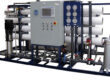
For industries requiring the highest water quality, such as pharmaceuticals or electronics, reverse osmosis (RO) systems are the industry standard. These systems rely on high-pressure membranes housed in robust pressure vessels. When combined with electrodeionization systems, we achieve chemical-free ultra-pure water production.
The Role of Pressure Vessels and Storage Solutions
A treatment plant is only as strong as its components. AAT does not just design systems; we manufacture the core hardware required for safe operation.
Cryogenic Storage Tanks: Designed for storing gases in liquid form at extremely low temperatures with high-grade insulation.
Gas Storage and Atmospheric Storage Tanks: Safe containment for flammable or corrosive liquids is the backbone of facility safety.
Vaporizers and Heat Exchangers: These units optimize thermal transfer, directly supporting the energy efficiency aspect of why should industrial wastewater be treated.
Atmospheric Protection: Air and Odor Control
Treatment is not limited to the liquid phase. Industrial facilities often produce harmful emissions. Our flue gas treatment systems mitigate atmospheric pollution, while odor control units improve the air quality for surrounding communities. During these processes, degasifier systems are used to remove dissolved gases like $CO_2$ or $H_2S$ from the water stream.
Service, Maintenance, and Operation
Installing a system is only the beginning. To ensure long-term reliability, service maintenance operation is essential. For companies looking for temporary or low-CAPEX solutions, our rental treatment options provide the necessary flexibility without the upfront investment.
Ultimately, understanding why should industrial wastewater be treated leads to the adoption of advanced technologies like ultraviolet disinfection systems, which eliminate pathogens without the use of harmful chemicals.
Conclusion
Sustainability in industry is no longer optional. The answer to why should industrial wastewater be treated is clear: it protects our environment, ensures legal safety, and drives economic value through recovery. From river water treatment systems to complex equipment manufacturing, AAT stands as a global partner in engineering a cleaner industrial future.