How do water treatment systems work? is a fundamental question for any industry that relies on high-quality water for its production processes, cooling systems, or general operations. In today’s industrial landscape, water is more than just a resource; it is a critical component that requires precise engineering to ensure safety, efficiency, and sustainability. AAT, a leader in pressurized tank production and industrial treatment plant installation, provides comprehensive solutions to this complex challenge. By understanding how do water treatment systems work?, businesses can better appreciate the sophisticated technology behind reverse osmosis (RO) systems, sand filters, and demineralization systems that keep their operations running smoothly.
Understanding the Core: How do water treatment systems work?
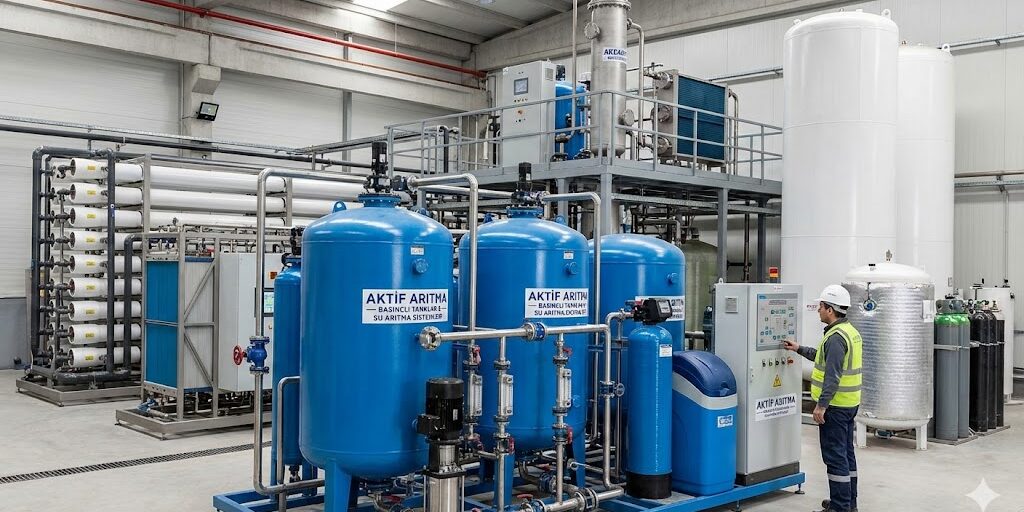
To answer the question how do water treatment systems work?, we must first look at the source of the water and the specific contaminants that need to be removed. Whether a facility is utilizing river water treatment systems or well water, the goal is to transform raw water into a usable asset. The process typically begins with primary filtration. Sand filter units are designed to remove suspended solids and turbidity. But how do water treatment systems work? in terms of chemical purification? This is where carbon filter technology comes in, utilizing adsorption to remove chlorine, organic compounds, and odors.
At AAT, we design these systems using high-quality equipment manufacturing standards, ensuring that every pressure vessel and atmospheric storage tank used in the process meets international safety codes. The mechanical foundation of how do water treatment systems work? relies on these robust containers to withstand the pressures required for effective filtration.
The Role of Advanced Membrane Technology
When standard filtration isn’t enough, the focus shifts to molecular-level purification. So, how do water treatment systems work? when dealing with dissolved salts and heavy metals? The answer lies in reverse osmosis (RO) systems. These systems use high-pressure pumps to force water through semi-permeable membranes, leaving contaminants behind. This is a cornerstone of modern industrial treatment plant installation.
How do water treatment systems work?
How do water treatment systems work? in a multi-stage industrial environment? It is a synchronized dance of pressure and chemistry. First, the water is pre-treated to prevent scaling on the membranes. This often involves water softening systems that swap calcium and magnesium ions for sodium ions. Then, the water enters the pressurized tanks of the RO unit. Understanding how do water treatment systems work? requires recognizing that each stage—from the sand filter to the final ultraviolet disinfection systems—is essential for protecting the delicate membranes and ensuring the longevity of the entire plant.
Specialized Systems for High-Purity Water
For industries like pharmaceuticals or power generation, standard purification is insufficient. They require ultra-pure water, leading to the question: how do water treatment systems work? when ion-level purity is required? In these cases, demineralization systems and electrodeionization (EDI) systems are employed. Electrodeionization systems use electricity, ion-exchange membranes, and resin to deionize water without the need for hazardous chemicals.
AAT excels in consulting & project engineering for these high-tech installations. When clients ask how do water treatment systems work? in the context of power plants, we also point to degasifier systems. These systems are vital for removing dissolved gases like oxygen and carbon dioxide, which can cause severe corrosion in boilers and heat exchangers.
The Integration of Pressurized Equipment and Gas Storage
The expertise of AAT extends beyond just water. We are masters of pressurized tank production, including cryogenic storage tanks and gas storage solutions. You might wonder, how do water treatment systems work? in relation to gas storage? Many treatment processes, such as ozone disinfection or pH adjustment, require the precise storage and dosing of industrial gases.
Our pressure vessels are engineered to handle the extreme conditions required for cryogenic storage tanks, while our vaporizers and heat exchangers manage the thermal energy required to transition gases from liquid to gaseous states. This holistic approach to equipment manufacturing ensures that when we explain how do water treatment systems work?, we are covering every physical and thermal variable involved in the process.
Sustainable Solutions: Wastewater and Recovery
A modern answer to how do water treatment systems work? must include what happens after the water is used. Wastewater treatment systems and recovery systems are now mandatory for environmentally conscious enterprises. AAT develops systems that treat industrial effluent, allowing for the reuse of water within the facility.
Furthermore, we address air quality through flue gas treatment and odor removal technologies. Even in these gaseous processes, the logic of how do water treatment systems work? applies: identify the pollutant, choose the correct medium (physical or chemical), and utilize a well-engineered pressure vessel or scrubber to facilitate the reaction.
Maintenance and Operational Excellence
No matter how sophisticated the design, the real test is: how do water treatment systems work? over the long term? Reliability depends on consistent service maintenance operation. AAT provides ongoing support to ensure that sand filters are backwashed, water softening systems are regenerated, and reverse osmosis (RO) systems are monitored for flux and rejection rates.
For companies not ready for a permanent capital investment, we offer rental treatment solutions. This allows facilities to experience how do water treatment systems work? firsthand, utilizing our mobile units for temporary needs or emergency bypasses.
Engineering the Future of Water
To truly grasp how do water treatment systems work?, one must look at the synergy between different components. At AAT, we don’t just sell parts; we provide consulting & project engineering to create a seamless flow. From the initial river water treatment systems intake to the final ultraviolet disinfection systems, every step is calculated.
Our production of atmospheric storage tanks allows for the safe buffering of treated water, while our heat exchangers ensure that the water is at the optimal temperature for the next stage of production. When you ask how do water treatment systems work?, you are asking about a system where AAT has refined every detail, from the weld on a pressurized tank to the automation software controlling the electrodeionization systems.
Technical Breakdown: How do water treatment systems work?
Let’s dive deeper into the mechanics. How do water treatment systems work? Step-by-step:
Inlet and Pre-Filtration: Raw water enters through pressurized tanks containing multi-media layers. The sand filter traps large particles.
Adsorption: The water passes through a carbon filter, where organic molecules stick to the porous surface of the carbon.
Ion Exchange: In water softening systems, hard minerals are exchanged. This is a vital part of how do water treatment systems work? to prevent equipment failure.
Membrane Separation: The heart of the process. Reverse osmosis (RO) systems use pressure to overcome osmotic pressure, pushing pure water molecules through a membrane.
Polishing: For ultra-pure needs, demineralization systems or electrodeionization (EDI) systems remove the final traces of ions.
Disinfection: Before the water is stored in atmospheric storage tanks, ultraviolet disinfection systems kill any remaining bacteria.
By following this sequence, how do water treatment systems work? becomes a clear roadmap to purity. AAT ensures that each of these stages is backed by superior equipment manufacturing and rigorous service maintenance operation.
The Importance of High-Quality Equipment
The durability of these systems is tied to the quality of the hardware. How do water treatment systems work? effectively if the tanks leak or corrode? They don’t. That is why AAT focuses on high-end pressurized tank production. Our pressure vessels and cryogenic storage tanks are built to last, providing a secure environment for both water treatment and gas storage.
In addition, our vaporizers and heat exchangers are designed to optimize energy use. When considering how do water treatment systems work?, energy efficiency is a major factor. By recovering heat or optimizing pressure drops, we ensure that the cost of treated water remains low.
Conclusion: Partnering with AAT
So, how do water treatment systems work? They work through a combination of expert engineering, high-quality manufacturing, and dedicated maintenance. Whether you need wastewater treatment systems, recovery systems, or complex demineralization systems, AAT is your partner in excellence.
Our expertise in pressurized tanks, cryogenic storage tanks, and industrial treatment plant installation makes us uniquely qualified to answer how do water treatment systems work? for your specific needs. From flue gas treatment to kiralık arıtma (rental treatment), we cover the full spectrum of industrial environmental needs.
How do water treatment systems work? It’s about more than just filters; it’s about a commitment to quality. Trust AAT for your next project in equipment manufacturing and consulting & project engineering. We ensure that your systems don’t just work—they excel.