How Do Water Treatment Plants Work? This fundamental question addresses one of the most critical processes in modern industry and environmental conservation. As global water scarcity increases, the ability to transform raw water or industrial waste into clean, usable resources has become a hallmark of sustainable engineering. Aktif Arıtma, a leader in the field, provides comprehensive solutions ranging from equipment manufacturing to consultancy & project engineering, ensuring that every drop of water is managed with precision and expertise.
Understanding the mechanics behind these facilities is essential for businesses aiming to optimize their operations. Whether dealing with river water treatment systems or complex industrial wastewater treatment systems, the core objective remains the same: removing contaminants to meet specific quality standards.
How Do Water Treatment Plants Work?
To answer the question How Do Water Treatment Plants Work? one must look at the sequence of specialized stages designed to target different types of impurities. A standard high-efficiency plant operates through a series of physical, chemical, and biological barriers.
1. Pre-Filtration and Physical Separation
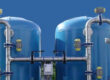
The process begins by removing large debris and suspended solids. This is where sand filter units play a vital role. By utilizing multi-layered media, these filters trap silt, dirt, and organic matter. Following this, a carbon filter is often employed to remove chlorine, volatile organic compounds (VOCs), and unpleasant odors. At Aktif Arıtma, we ensure these primary stages are robust enough to protect more sensitive downstream equipment like reverse osmosis (RO) systems.
2. Ion Exchange and Water Softening
Hard water contains high levels of calcium and magnesium, which can cause scaling in pressurized tanks and heat exchangers. Water softening systems solve this problem through ion exchange, replacing hardness ions with sodium ions. This stage is crucial for preventing damage to industrial boilers and cooling towers.
3. Advanced Membrane Filtration: Reverse Osmosis
When high-purity water is required, reverse osmosis (RO) systems are the gold standard. By applying high pressure to overcome osmotic pressure, water is forced through a semi-permeable membrane. This removes up to 99% of dissolved salts, bacteria, and pathogens. Aktif Arıtma specializes in designing custom RO units that balance energy efficiency with maximum permeate recovery.
The Role of Pressurized Equipment in Water Treatment
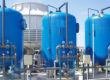
A treatment plant is not just about filters; it is an assembly of high-performance hardware. The integrity of the system depends on the quality of pressurized tanks and gas storage units used throughout the process.
Pressurized Vessels and Gas Management
In many treatment processes, gases like ozone or oxygen must be dissolved into the water for disinfection or oxidation. This requires specialized pressurized vessels and gas storage solutions that can withstand high operational stresses. Aktif Arıtma manufactures these components to meet international safety standards, ensuring long-term reliability.
Thermal Management: Heat Exchangers and Vaporizers
Temperature control is often a silent but critical factor in treatment efficiency. Heat exchangers are used to recover thermal energy from treated effluent or to maintain optimal temperatures for biological treatment. Furthermore, in facilities that utilize cryogenic storage tanks for liquid nitrogen or oxygen, vaporizers are necessary to convert these liquids back into gas for process use.
Industrial Wastewater Treatment Systems
In the industrial sector, the challenge is more complex. Industrial wastewater treatment systems must handle heavy metals, oils, and toxic chemicals. The goal is often twofold: environmental compliance and water reuse.
Aktif Arıtma designs recovery systems that allow factories to recycle their process water, significantly reducing operational costs and environmental impact. These systems often integrate demineralization systems and electro-deionization (EDI) systems to achieve the ultra-pure water levels required for sensitive manufacturing processes.
Specialized Treatment Technologies
Degazifier Systems: Used to remove dissolved corrosive gases like CO2 and O2, protecting pipes and pressurized tanks from internal corrosion.
Ultraviolet (UV) Disinfection Systems: A chemical-free method to neutralize bacteria and viruses by disrupting their DNA.
Electro-deionization (EDI): A continuous process that uses electricity rather than chemicals to produce high-purity water.
Air Quality and Environmental Protection
The expertise of Aktif Arıtma extends beyond the liquid phase. Industrial facilities also produce gaseous byproducts that require treatment. Flue gas treatment and odor control systems are essential for maintaining air quality and meeting stringent emission regulations. By integrating these systems with atmospheric storage tanks, plants can safely manage and treat both liquid and gaseous emissions.
Engineering and Maintenance Services
Building a treatment plant is a significant investment, but its success depends on proper design and upkeep. Aktif Arıtma provides end-to-end consultancy & project engineering, ensuring that the system is tailored to the specific raw water chemistry of the site.
Once the plant is operational, service maintenance becomes the priority. Regular inspections of pressurized vessels, membrane cleaning for RO systems, and resin replacement for water softening systems are all part of a comprehensive maintenance plan. For businesses that need temporary solutions, rental treatment options provide a flexible way to manage water needs without large capital expenditures.
Summary of the Treatment Lifecycle
To truly grasp How Do Water Treatment Plants Work?, one must view it as a holistic cycle. It starts with a comprehensive analysis of the water source—be it a well, a river, or a city main. Then, through a combination of equipment manufacturing expertise and chemical engineering, a customized solution is built.
Whether it involves river water treatment systems for a remote site or demineralization systems for a power plant, the objective is consistent: quality, reliability, and sustainability. Aktif Arıtma remains committed to pushing the boundaries of what is possible in water and gas management.
Technical Integration: From Tanks to Membranes
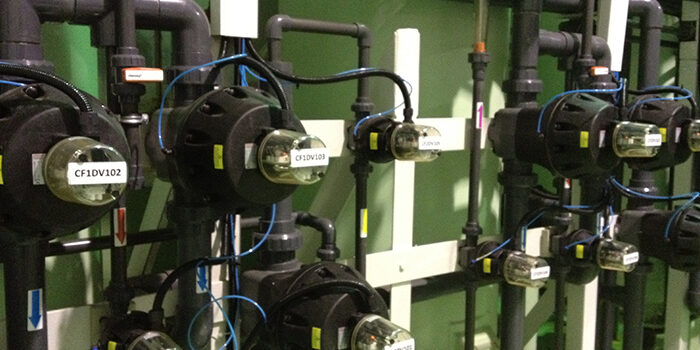
Every component, from atmospheric storage tanks to the smallest carbon filter, must work in harmony. The automation systems monitor pressure, flow, and conductivity in real-time. If a sand filter becomes clogged, the system triggers a backwash. If the hardness levels rise, the water softening systems regenerate. This intelligent orchestration is the true answer to How Do Water Treatment Plants Work? in a modern, smart-factory environment.
By choosing Aktif Arıtma, you are not just buying equipment; you are partnering with experts who understand the intricate balance of chemistry, physics, and mechanical engineering. Our dedication to equipment manufacturing excellence ensures that every pressurized tank and heat exchanger we produce contributes to a cleaner, more efficient world.
Final Thoughts on Efficiency
Efficiency in water treatment is measured by the quality of the output and the minimalization of waste. Advanced recovery systems are now capable of achieving “Zero Liquid Discharge” (ZLD) in some industries. As we continue to innovate, the question of How Do Water Treatment Plants Work? will increasingly focus on how we can do more with less—less energy, fewer chemicals, and less waste.